Understanding Light
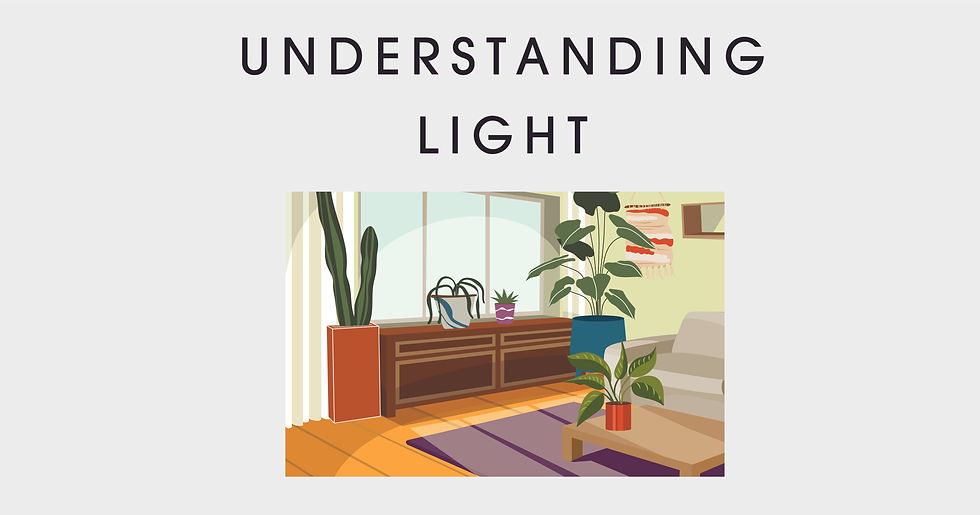
Finding the right lighting for your plant is crucial, as it is one of the most important aspects of your plant journey and your plants' health.
But how? Well, if you have ever purchased a plant, there is usually a tag that has the name and care instructions for it. Most of these will have something incomprehensible like "indirect light" or "East window loving plant." I used to think to myself, "What the **** does that mean? I'll just ignore it." Now, maybe you are a more sensible person than I am and seek help from others or through the internet, but if you don't want to do that, I have the answer for you.
Windows - Which Coordinate do you need?
When you bring your plant home or even before you go plant shopping, do the following. Use the compass app on your phone or an actual compass and see which window points to which coordinate. After you do this, it may be difficult to keep remembering which window is what coordinate, but the best way to remember is to look out your window and see where the sun rises and where it sets.
The window where the sun rises is the East-Facing Window. Windows that face East typically have bright direct light that diminishes throughout the day to an indirect light that is good for Ferns, Pothos, Marantas, Calatheas, and Monsteras.
The window where the sun sets is the West Facing-Window. Windows that face West typically get ample of afternoon direct light and indirect light as the day progresses. This window is great for plants like Succulents, String of Hearts, and flowering plants like Hoyas and Cacti.
The South Facing-Window is the window where most direct lighting will come in. Light-loving plants like Succulents, Cacti, Fiddle Leaf Fig, and Orchids will love this window.
The North Facing-Window is the window that will have the least amount of direct light. Making this window the best place for a low light plant like a ZZ plant, Snake plant, or a Spider plant.
Direct VS. Indirect
Direct lighting is when your plant is receiving light that is directly on it, most likely these plants are on a window seal or hung infront of a window.
Indirect lighting is when the light is diffused by distance, sheer curtains, or even furniture/other plants.
A fun trick you can use to know whether a window has bright direct light or bright indirect light is to put your hand in front of the window. If the shadow of your hand is crisp, it is direct lighting. If the shadow of your hand is fuzzy around the edges, it is indirect lighting.

Comments